Why Tie Bar Strain Gauge Testing Belongs in Your Die Casting Maintenance Plan
Uneven clamping force across the four tie bars shows up as flash, die wear and dimensional drift long before anything breaks. Strain gauge measurement is how you see it.
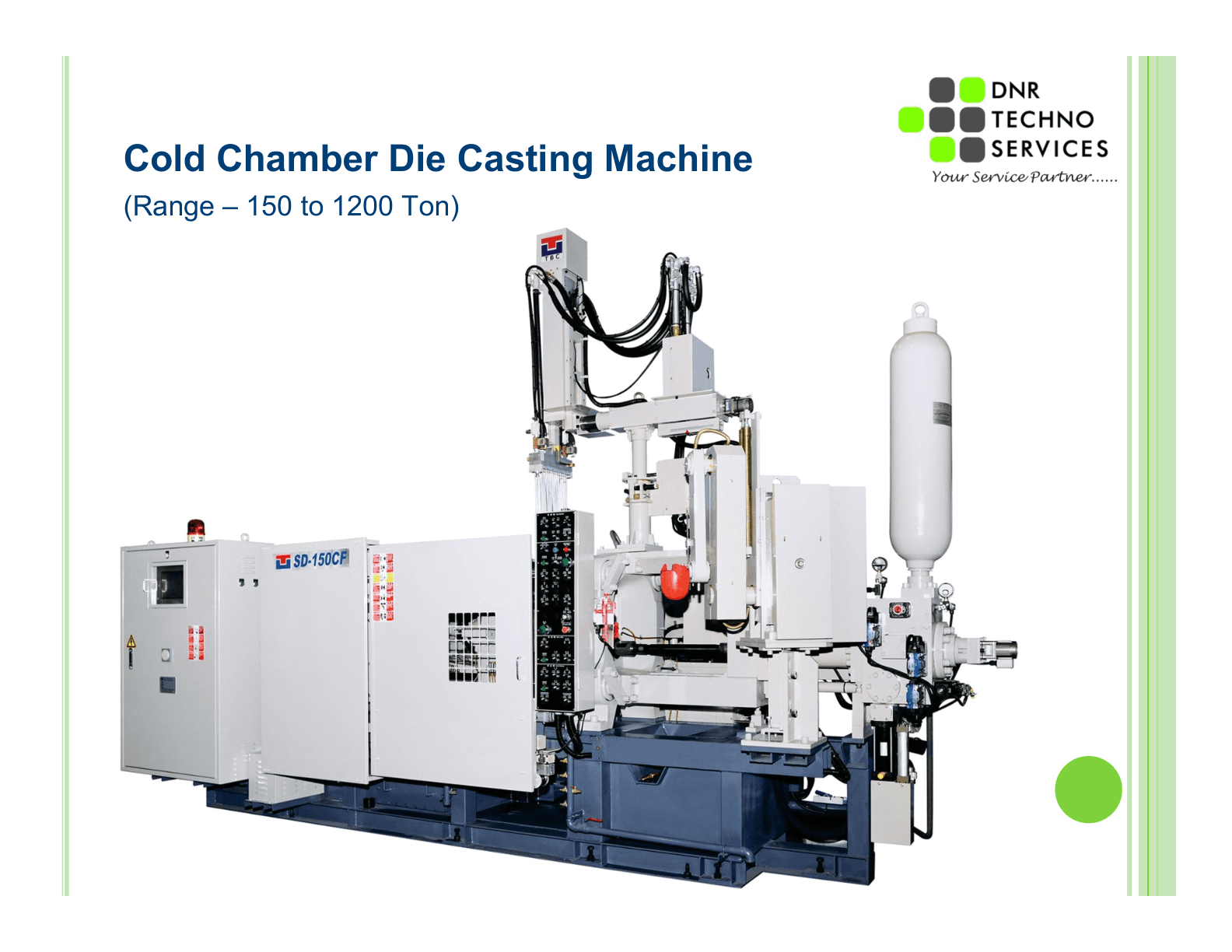
A die casting machine's four tie bars are supposed to share the clamping load evenly. When they stop sharing it evenly, the machine does not announce it. The symptoms show up on the castings first, and they are easy to blame on something else.
What the measurement tells you
Strain gauges fitted to each tie bar measure how much each one actually stretches under clamp. Because stretch is proportional to load, that gives you the real force distribution across all four corners rather than the single number the machine reports.
A well-balanced machine will show the four bars within a reasonably tight band of each other. A machine with a problem will show one or two bars carrying noticeably more than the others — and that is the condition that quietly damages dies.
What imbalance does to your process
Flash on one side of the parting line. If one corner is carrying less load than the others, the die opens fractionally on that side during injection. Operators often respond by increasing clamp tonnage, which loads the already overloaded bars harder.
Accelerated die wear. Unequal clamping means unequal contact pressure across the parting face. The high-load corners wear faster, and the die needs rework sooner than its expected life.
Dimensional drift. Parts drawn from a die that is not closing squarely will show dimensional variation that is hard to trace, because the die itself is in tolerance.
Eventual tie bar failure. A bar carrying substantially more than its share for a long period is being fatigued. Replacing a tie bar is expensive, and the downtime around it is worse.
What causes it
Several things, and they compound:
- machine foundation settling or an uneven floor
- platen wear after long service
- a die that is not centred, or whose height is not set correctly
- toggle mechanism wear on the moving platen side
- a tie bar that was replaced without the set being rebalanced afterwards
When to measure
Worth doing at these points rather than only when something is already wrong:
- after any tie bar replacement, without exception
- after relocating a machine or reworking its foundation
- when flash appears consistently on one side of the parting line
- when a die wears unevenly for no obvious reason
- as a periodic check on machines running continuous production
What happens after the measurement
The measurement itself is diagnostic. The corrective work depends on what it shows — adjusting die height, re-shimming, correcting platen parallelism, or rebalancing nut positions on the tie bars. The point is that you cannot make those corrections sensibly without knowing the current load distribution first.
DNR Techno Services provides tie bar strain gauge services for pressure die casting machines, along with breakdown maintenance and periodic maintenance and AMC support. If you are seeing one-sided flash or unexplained die wear, share the machine details through the contact page.