Hot Chamber vs Cold Chamber Die Casting: Which One Fits Your Alloy
The choice between hot chamber and cold chamber machines is decided by the alloy you are casting, not by part size or budget. Here is how the two differ and where each belongs.
Buyers often approach this decision as if it were about part size or budget. It is not. The alloy you intend to cast rules out one of the two options before anything else is considered.
What actually separates the two
In a hot chamber machine, the injection system sits inside the molten metal. A gooseneck and plunger are submerged in the holding furnace, so metal is drawn in and injected without being transferred by hand or ladle.
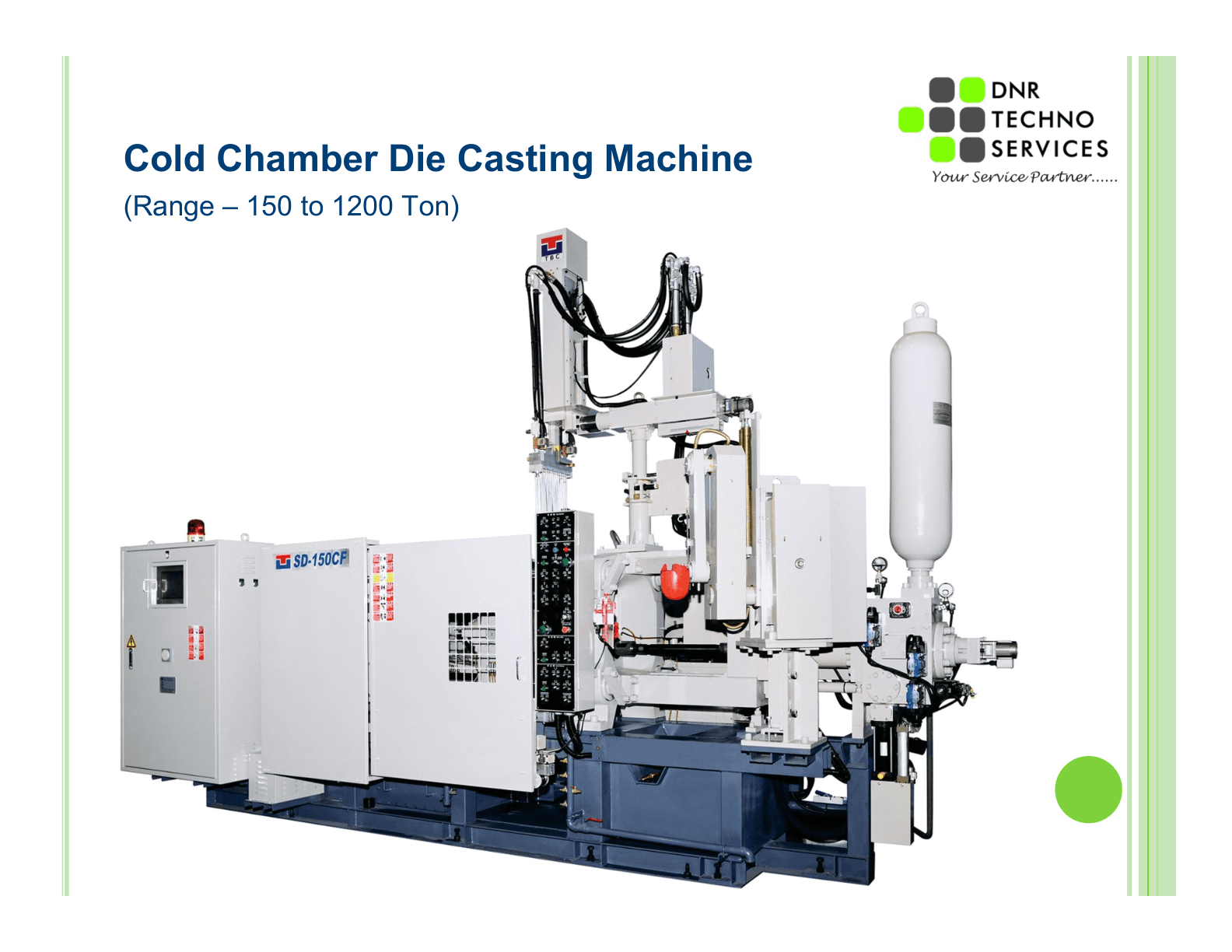
In a cold chamber machine, the injection system sits outside the melt. Metal is ladled into a shot sleeve for each cycle, then driven into the die by a plunger.
That single difference — whether the pump lives in the metal or outside it — determines everything else.
Why the alloy decides it
Molten aluminium is aggressive towards steel. Leave a steel gooseneck and plunger sitting in aluminium and the melt attacks them continuously, so the injection components wear out and iron pick-up contaminates the casting. This is why aluminium is cast on cold chamber machines: the shot sleeve contacts the metal only briefly, once per cycle.
Zinc behaves differently. Its melting point is far lower and it is not nearly as aggressive towards the steel it sits in, so a submerged injection system survives. That is what makes hot chamber practical for zinc, and the same reasoning extends to magnesium and some lead and tin alloys.
So in practice:
- Zinc, magnesium, lead, tin — hot chamber
- Aluminium, brass and copper alloys — cold chamber
What you give up either way
Hot chamber is faster. There is no ladling step, so cycles are shorter and the process automates more readily. That matters when you are producing small zinc components in large volumes — hardware, fittings, decorative parts, connectors.
Cold chamber is slower but takes higher pressure. The ladle step adds seconds to every cycle and introduces a variable that has to be controlled, since the volume and temperature of each ladle affects the shot. In exchange you can run the higher injection pressures that aluminium structural parts need, and you are not limited by what a submerged gooseneck can survive.
Where buyers get this wrong
The most common mistake is deciding by part size. A small aluminium part still needs a cold chamber machine. A large zinc part can still be cast hot chamber within the machine's limits. The alloy comes first.
The second mistake is sizing the machine on part weight alone. Clamping force has to hold the die closed against the injection pressure acting over the projected area of the casting and its runner system. Two parts of the same weight can need very different tonnages depending on how they are laid out in the die.
Before you shortlist a machine
Have these ready, because any supplier worth talking to will ask:
- the alloy, and whether it is fixed or still open
- the part's projected area in the die, not just its weight
- target output per shift, and how many cavities that implies
- wall thickness and whether the part is structural or cosmetic
- what your plant can supply in power, cooling water and floor space
Getting a second opinion
If the alloy is settled, the machine type follows from it. The harder questions are tonnage, cavity count and whether your existing plant services can support the machine you are considering.
DNR Techno Services supports manufacturers through that stage — machine selection against your process and plant constraints, installation and commissioning coordination, and ongoing service and spare-parts continuity. If you are weighing a die casting purchase, share your alloy, part geometry and output target through the contact page and we will come back with the right next step.