
How to Choose the Right CNC Turning Machine for Your Manufacturing Unit
Choosing the right CNC turning machine depends on component size, material, accuracy requirement, production volume, tooling needs, and long-term service support. This guide helps manufacturing teams make a practical machine selection decision.
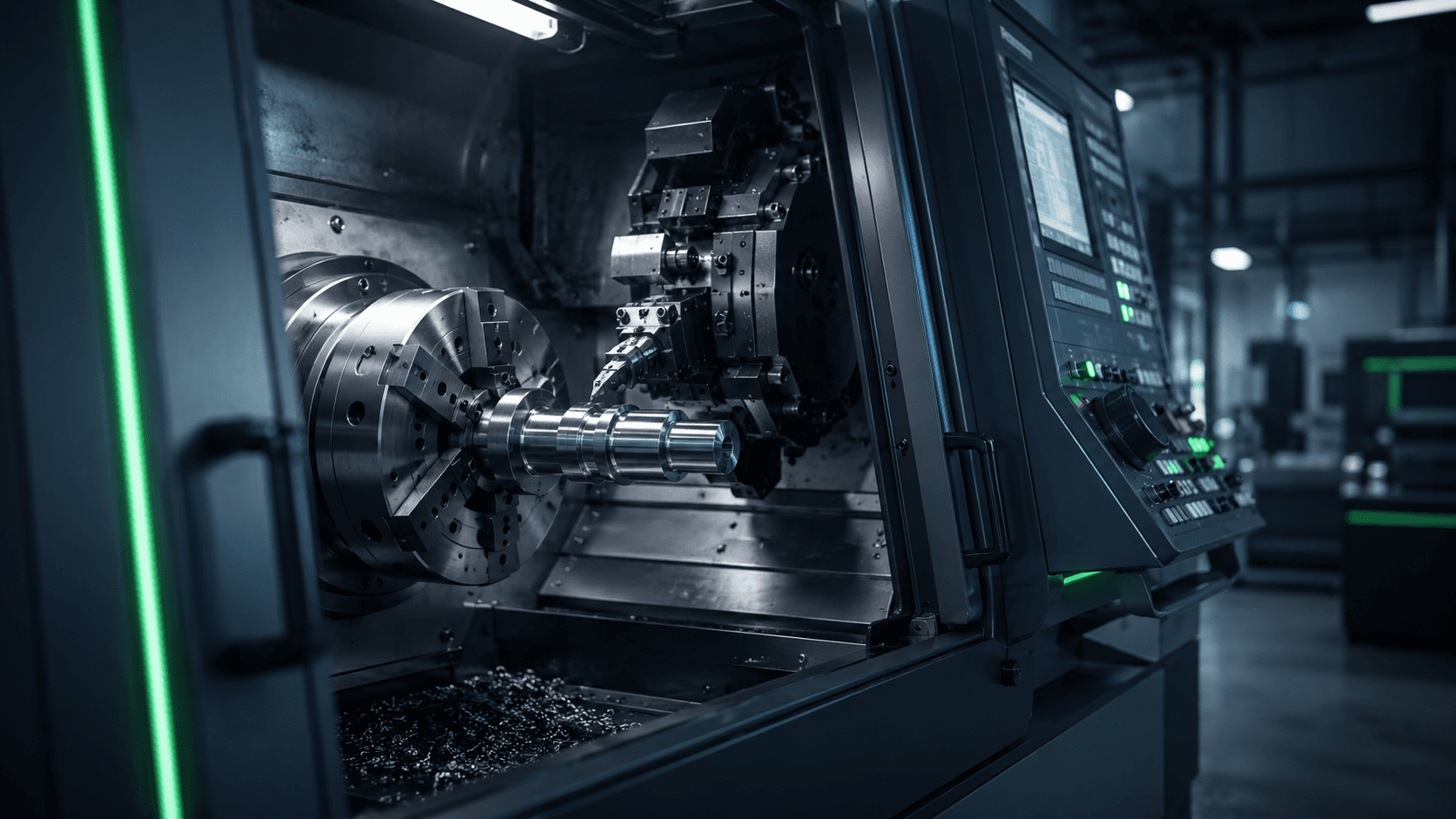
How to Choose the Right CNC Turning Machine for Your Manufacturing Unit
A CNC turning machine is one of the most important machines in a machining or component manufacturing setup. It is used for turning, facing, drilling, boring, threading, profiling, and finishing operations on metal components.
For many manufacturers, the challenge is not only buying a CNC machine. The real challenge is choosing a machine that fits the production requirement, component size, accuracy target, service expectation, and long-term operating cost.
1. Start with the component requirement
Before selecting a CNC turning machine, study the component you want to manufacture.
Check these points:
- Component diameter
- Component length
- Material type
- Weight of the job
- Required tolerance
- Surface finish requirement
- Batch size
- Cycle time expectation
A small precision component and a heavy industrial component cannot be planned with the same machine configuration. The machine should match the actual job requirement, not only the catalogue capacity.
2. Check turning diameter and turning length
The machine’s maximum turning diameter and turning length should comfortably support your component size.
Avoid selecting a machine that always runs near its maximum limit. If the job size is too close to the machine’s capacity, it can affect stability, tool life, accuracy, and production consistency.
A practical approach is to keep some capacity margin for future components.
3. Match the machine with material type
Different materials need different machining behavior.
For example:
- Aluminium requires high-speed machining and good chip removal
- Cast iron needs rigidity and dust/chip control
- Steel needs cutting force and stable tooling
- Stainless steel needs proper coolant flow and tool selection
The CNC turning machine should have suitable spindle power, bed rigidity, coolant system, and tooling arrangement based on the material being machined.
4. Review spindle power and speed range
Spindle power and speed directly affect cutting performance.
For light components, high spindle speed may be important. For heavy cutting, torque and rigidity become more important.
Do not select a machine only by looking at maximum RPM. Check whether the machine can handle your cutting load consistently during production.
5. Check turret and tooling requirements
The turret decides how many tools can be mounted and how quickly operations can be completed.
If your component needs turning, drilling, boring, grooving, and threading, proper turret capacity becomes important.
Also check:
- Number of tool stations
- Tool change time
- Live tooling requirement
- Tool holder availability
- Ease of setup
A better tooling setup can reduce cycle time and improve repeatability.
6. Consider automation needs
For high production volume, automation can improve output and reduce manual handling.
Depending on the requirement, you can consider:
- Bar feeder
- Robotic loading
- Gantry loading
- Chip conveyor
- Automatic door
- Part catcher
Automation is not required for every setup, but for repetitive production it can improve consistency and reduce handling time.
7. Evaluate service support and spare parts availability
A CNC machine is a long-term investment. Service support is just as important as the machine itself.
Before finalizing, check:
- Installation and commissioning support
- Availability of service team
- Spare parts availability
- Breakdown response time
- Operator training support
- Preventive maintenance guidance
A machine with poor support can increase downtime and affect production schedules.
Final checklist before buying
Before selecting a CNC turning machine, confirm:
- Component size and material
- Required tolerance and finish
- Production volume
- Spindle power and speed range
- Turret and tooling capacity
- Automation requirement
- Service support
- Spare parts availability
- Installation support
- Total cost of ownership
Conclusion
Choosing the right CNC turning machine is a practical decision based on production needs, machine capability, service support, and long-term reliability.
DNR Techno Services helps manufacturing teams evaluate machinery requirements, coordinate machine sourcing, support installation planning, and assist with spare parts and service coordination.